Before the Junction: Reading Britain's Road Restrictions on a Quarter-Tonne Tourer
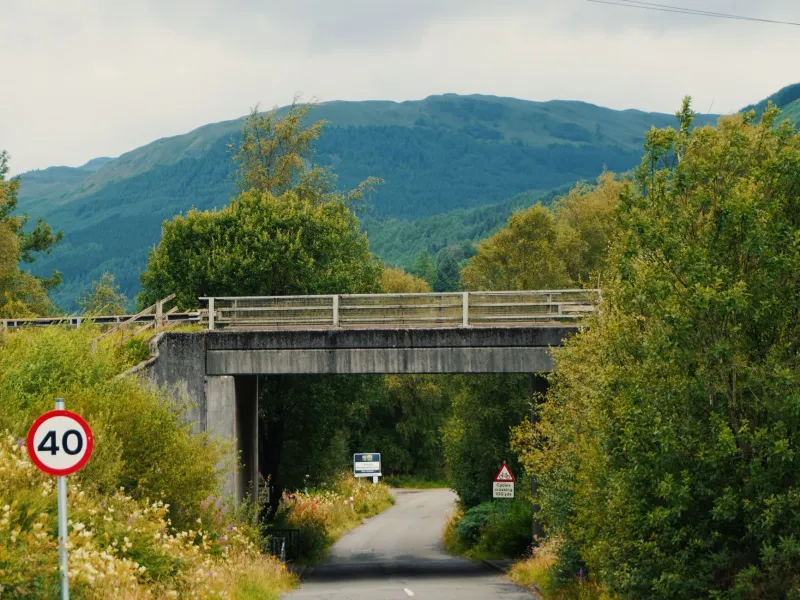
A route can look beautifully simple on a screen: a thin yellow B-road, a squiggle through a village, a shortcut over a river. Then you arrive at a red circle with a number in it, a set of bollards, or a sign saying the bridge is weak, and the tidy plan turns into a three-point turn on a 300kg motorcycle. The signs were there all along. We just hadn't learned to read them quickly enough.
This is not about avoiding every restricted road in Britain. Most of them were never aimed at us. It is about knowing which ones actually apply to a motorcycle, which ones are aimed at lorries, and which ones will physically stop a bike whether the law cares or not.
Know Your Envelope Before You Read the Signs
Before sign-reading makes any sense, know what you are asking the road to carry. A big tourer with panniers, a top box, a tank bag, a rider and a pillion can easily approach half a tonne. That is still well under the weight limits you will meet on ordinary roads, but having the number in your head stops you treating every 7.5T roundel as a personal obstacle.
Measure the width across the panniers rather than the handlebars, because that is what will meet a barrier first. Measure the height to the top of the screen, especially if you run a tall aftermarket screen or a sat-nav mast. Put both figures in a note on your phone. It takes two minutes and settles a lot of arguments at the roadside.
A Lorry in a Red Circle Is Usually Talking to Somebody Else
British weight restrictions come in several flavours, and the symbol matters as much as the number. A red circle showing a lorry silhouette above '7.5T' is a goods-vehicle restriction. It is not aimed at a motorcycle, a car or a camper van. Many of these are environmental weight limits, often with a plate underneath saying 'Except for access', which is the council's way of keeping through-HGV traffic out of villages while letting deliveries in.
A red circle with a plain weight figure and no lorry symbol is a different animal. That is a maximum gross weight prohibition applying to vehicles generally. You will see them on weak bridges, sometimes with a separate 'Weak bridge' plate. In practice a 300kg motorcycle is far below any of these limits, but read the sign rather than assuming the number is irrelevant. Some traffic regulation orders are written specifically to include motorcycles, and a minority of historic bridges or temporary structures carry limits low enough that the wording deserves a second look.
The useful habit is to ask two questions at every weight sign: does this apply to motorcycles at all, and if it does, is my loaded weight anywhere near it? Most of the time the answers are 'no' and 'nowhere close'. The point is that you checked, rather than guessing at 40mph with a junction coming up.
The Width Trap and the Barrier That Doesn't Negotiate
Width restriction signs show a figure between two arrows, commonly 6'6" or 2 metres. Legally, a motorcycle is nowhere near that. Physically, a set of bollards, a kissing gate, a chicane or a temporary barrier can still be awkward on a wide tourer with panniers fitted, particularly if the approach is on a camber, in the dark, or with a kerb that wants to introduce itself to your exhaust.
Height barriers are the other quiet trap. Car park entrances, multi-storeys and some rural byways carry height limits that a motorcycle will clear easily, but a tall screen, a flag pole or a top box can make you think twice. The real risk is not the legal limit; it is the angle of approach and the fact that you are balancing a heavy bike at walking pace while judging a gap.
Signs That Genuinely Apply to a Motorcycle
Some prohibitions really do include us. A red circle showing a car and a motorcycle side by side means no motor vehicles, full stop. A red circle with a solo motorcycle means no motorcycles. No entry and one-way signs apply as they do to everyone. And a traffic regulation order can close a road to motorcycles specifically, which is why the plate underneath a sign is worth reading rather than skimming.
Then there are the advisory signs. 'Unsuitable for motor vehicles' is not a legal prohibition, but on a wet November afternoon in Devon it is often sound advice. The same goes for fords, cattle grids, unmetalled lanes and gates that need opening and closing. A quarter-tonne tourer will usually get through; the question is whether you want to, loaded, with a pillion, twenty minutes before dusk.
Temporary restrictions deserve their own mention. Roadworks, bridge repairs and event closures change weekly, and a route that was clear in spring can be shut in autumn. In 2026 the mapping apps are good, but they are not a substitute for a quick look at the local council's roadworks page or the relevant traffic information service before you set off.
Doing the Homework Before the Day
Route planning for a heavy bike is mostly about removing surprises. Use the map to identify every weight roundel, width restriction and bridge on the line you fancy, then use satellite imagery to see what the junction actually looks like. Street View is excellent for checking whether a width restriction is a pair of bollards or a full barrier, and whether a road is tarmac or something more optimistic.
Set waypoints to force the route you want rather than letting the software choose a clever shortcut through a housing estate. If a road looks marginal, plan a B-road alternative before you need it. And if you are crossing a river on anything historic, check the council's closure list; weak bridges have a habit of being repaired in the same weeks you planned to use them.
A Simple Pre-Ride Check for Unfamiliar Roads
- Know your loaded weight, width across the panniers and height to the top of the screen.
- Scan the route for weight roundels and read the symbol, not just the number.
- Identify width restrictions and check the approach angle on satellite imagery.
- Note any ford, gate, cattle grid or unmetalled section.
- Check the council's current roadworks and bridge closure list.
- Set waypoints so the sat-nav follows your plan rather than its own.
- Have a B-road fallback for every marginal section.
- Carry a paper note of the route in case the phone dies in the cold.
If You Meet One Anyway
Arriving at a restriction is not a failure; squeezing through it is. Pull in where it is safe, read the plate properly, and accept the detour. U-turns on a heavy tourer need space and a plan, so give yourself room rather than trying to pivot on a narrow lane with a ditch on one side and a hedge on the other.
Most British road restrictions were written for lorries, not motorcycles, and most days they will never trouble a big bike. But the ones that do tend to arrive suddenly, at the end of a long ride, when concentration is thinning. Reading the signs before the junction is cheaper than learning the lesson at the barrier.