Parked by Gravity: Keeping a 300kg Motorcycle Upright on British Ground
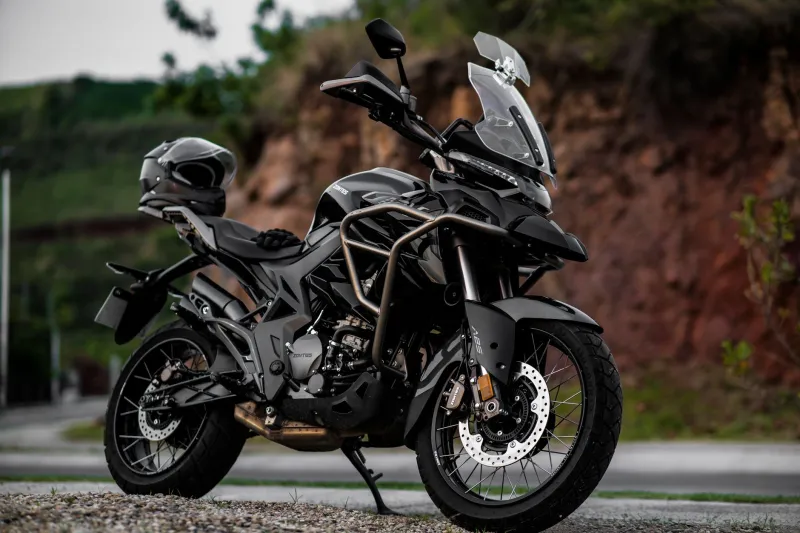
There is a particular kind of silence that follows a heavy bike going over in a car park. It starts with a creak, then a scrape, then a very expensive clatter. Everyone turns round. Nobody wants to be the rider standing there holding a coffee and a look of regret.
The awkward truth is that parking a 300kg motorcycle is not really about strength. It is about reading the ground, choosing your angle, and not asking a side stand to do something it was never designed to do. British parking spots are rarely generous, and they are even less often flat.
The Ground Is Rarely on Your Side
A motorcycle side stand concentrates a quarter of a tonne onto a very small patch of metal. On fresh summer tarmac that patch can soften. On a warm day, a loaded tourer parked outside a café can wake up leaning a few degrees further left than it went to sleep. On gravel, the stand can plough a small trench. On grass, it can disappear altogether.
The first habit is simple: look down before you look at the view. A quick scan for soft patches, loose gravel, painted lines, drain covers and kerb edges will tell you more about your chances than any gadget. Painted markings can be slick when wet. Drain covers sit proud or sunken. Old tarmac has a habit of crumbling at the edges.
If the surface looks questionable, assume it is. A heavy bike does not need much encouragement to settle on its side.
What the Side Stand Is Actually Doing
A side stand is a lean-angle device, not a levitating one. It holds the bike at an angle and takes weight, but it works best when the bike is stable in two directions: leaning left onto the stand, and held from rolling by the gearbox and a bit of forward pressure.
Parking in first gear is basic but worthwhile, especially on any kind of slope. Roll the bike forward until it stops, then leave it in gear. That gives the rear wheel something to push against and reduces the chance of it creeping. On a steep hill, pointing the front wheel downhill and leaving it in first is usually more stable than pointing uphill, because the bike naturally wants to roll away from the stand rather than into it.
The side stand itself should be fully deployed, not half out. Check that the foot is sitting on the ground, not on a stone or the edge of a kerb. If the stand is on a raised edge and the bike leans more than usual, reposition it before you walk away.
Pucks, Shoes and Other Small Mercies
A side-stand foot enlarger, often called a puck or a shoe, is one of the cheapest insurance policies in motorcycling. It spreads the load over a larger area and turns a sharp point into a flat plate. For anyone regularly parking a big bike on grass, gravel or hot tarmac, it is close to essential.
There are two broad types: bolt-on plates and removable pucks that sit under the stand. Bolt-on versions stay with the bike but add a small amount of bulk. Removable pucks need to live in a pocket or under the seat, which means you have to remember them. Neither is perfect. Both are better than watching a stand sink.
A flattened drinks can or a dedicated plastic puck can work in an emergency, but a proper plate is more predictable. If you use a removable puck, tether it to the bike or keep it with your keys. A puck that is always in the same place is a puck that actually gets used.
When the Centre Stand Earns Its Keep (and When It Doesn't)
A centre stand is brilliant for maintenance, luggage loading and keeping the bike stable on firm, flat ground. It lifts the rear wheel and spreads load across two feet, which can be more secure than a side stand on a level surface.
But a centre stand is not a magic solution on soft ground. It still concentrates weight, and lifting a 300kg bike onto it takes technique. On a slope, a centre stand can make things worse, especially if the bike is loaded. If the ground is uneven, the stand may only touch on one foot.
Use the centre stand when the surface is firm and level, and when you have time to deploy it properly. Use the side stand when you are making a quick stop or the ground is questionable. The centre stand is a workshop tool as much as a parking tool.
Hills, Cambers and the Art of Facing the Right Way
On a hill, the side stand should generally be on the downhill side. That means the bike leans into the slope rather than away from it. If the stand is on the uphill side, the bike may lean less than expected, or the stand may not reach the ground properly.
Camber is the quieter enemy. A road that slopes towards the kerb can make a bike lean further than the stand intends. A road that slopes away can make it sit more upright and less stable. If the camber feels wrong, find another spot. A few extra metres of walking is cheaper than a set of broken levers.
When parking on a slope, turn the front wheel towards the kerb or into the slope, depending on the direction of the hill. The aim is to make the bike want to stay put, not to let gravity choose for you.
The Café Test: Habits Before You Walk Away
Most tip-overs happen after the rider has stopped, not while moving. The bike is left in neutral, the stand is half down, the ground is soft, and the rider is already thinking about tea. A short routine prevents most of it.
Stop. Look at the ground. Choose the spot. Deploy the stand fully. Leave the bike in gear. Push it forward slightly to settle. Check the lean. Then walk away.
That is it. No heroic strength required. Just a few seconds of attention. A quarter-tonne motorcycle will forgive a lot, but it will not forgive being parked on a patch of soft grass outside a garden centre in July.
Before you turn your back, give the bike a gentle nudge from the opposite side. If it rocks more than you expect, reposition it. If the stand looks buried, move it. If the ground is questionable, use a puck. These small habits are what separate a relaxed stop from a slow-motion disaster.
Parking a heavy bike well is not about being fussy. It is about respecting the weight, reading the surface and giving the stand a fair chance. Do that, and the bike will still be upright when you come back with your coffee.