Bolt-On Ballast: The Accessory Audit Every Quarter-Tonne Tourer Deserves
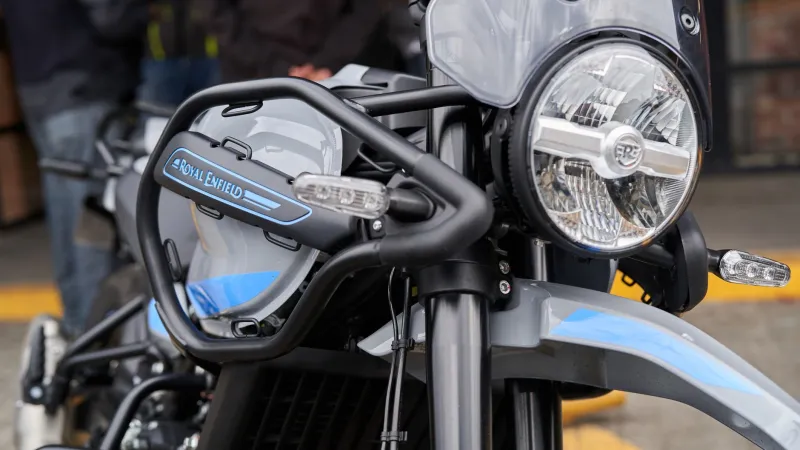
A bloke rolled into the workshop last month on a big shaft-drive tourer, and honestly, the thing looked like it had been attacked by a catalogue. Engine bars, a sump guard, two sets of auxiliary lights, a top box big enough to hide a Labrador, and pannier frames carrying hard cases that could probably survive a small IED. Nothing on it was broken. That was the frustrating bit. It just rode badly — vague at the front, skittish over crests, and the alternator was making the sort of noise that precedes a very expensive conversation.
We weighed the bolt-ons out of curiosity. Just over 28kg, before you put anything in them. On a bike with a 300kg kerb weight, that's near enough ten per cent of the machine hanging off brackets, and most of it sat high and far from the middle. The owner hadn't done anything stupid. He'd done what the accessories aisle told him to do.
So this isn't a rant about aftermarket kit. Good accessories transform a big bike. But 'heavy-duty' is a marketing word, not an engineering one, and on a quarter-tonne machine the margins are thinner than the brochures suggest.
The weight you can feel, and the weight you can't
A 300kg bike is already a study in mass management. Rake, trail, spring rates and frame stiffness have all been tuned around a specific figure on a spec sheet. Add 20-30kg of scaffolding and you've moved the goalposts — usually upward, which is the worst direction.
High-mounted mass is the enemy. Crash bars sit at knee height, top boxes sit above the pillion seat, and auxiliary lights hang off the beak like a pair of headlamps on a stalk. Every kilo up there makes the bike slower to change direction and more likely to keep going once it's committed. You feel it most on a gusty day on the Severn Bridge, or when a Welsh B-road throws a tightening bend at you and the front end decides to have an opinion.
A useful rule of thumb: keep the total weight of bolt-on kit under about five per cent of kerb weight. On a 300kg tourer, that's 15kg. That's less than most people think. Do the sums before you buy, not after — bathroom scales and a bit of honesty will tell you more than any product page.
Crash bars: protection, or a lever bolted to your frame?
Crash bars do a job. Drop a big tourer at a petrol station and they can save you a cracked fairing and a £600 bill. Fair enough.
But a crash bar is also a lever. It extends the point of contact outwards, and in a slide it can dig into tarmac and transmit forces into engine mounts and frame lugs that were never designed for that direction of load. Cheap bars with thin wall tube and generic clamps flex, then crack, then leave you with a bracket-shaped scar on the engine casing. OEM bars are usually designed alongside the frame, with crush zones and tested mounting points. Aftermarket ones often aren't.
There's a practical cost too: width. Bars add 100-150mm either side. That's the difference between filtering confidently through a gap on the A406 and hesitating, and hesitating on a big bike is how you end up dropping it in the first place.
Skid plates and the myth of the unprotected sump
On a proper adventure bike, a stout sump guard makes sense. On a road-biased tourer with a plastic belly pan, a 4mm aluminium plate is often solving a problem that doesn't exist. Worse, it can create new ones: trapped heat around the exhaust, mud and salt collecting in a place you can't rinse, and vibration transmitted through rubber-mounted engines because the plate is bolted solid.
If you genuinely ride gravel tracks and green lanes, fine. If your big bike's diet is motorway and market town, save the money and the kilos.
Auxiliary lighting and the charging maths
LED spotlights are brilliant and, individually, draw very little. The trouble is that nobody fits one pair. Add heated grips, a heated jacket, a satnav, a phone charger and a dash cam, and you're stacking loads on an alternator that was specced for the bike as sold.
Do the arithmetic. A typical big tourer might have 500-700W of gross output, but net output at idle is far lower and the battery is only a buffer, not a generator. A 20W drain doesn't sound like much until it's 20W for four hours in the dark with the heated kit on.
Then there's the wiring. Scotch connectors, twisted-and-taped joints and unfused Lives tapped straight off the battery are how bikes end up with flat batteries, melted looms and mysterious faults that take a day to trace. Fit a proper relay, a fused switched live, waterproof connectors and a dedicated earth. If you can't, pay someone who can — it's cheaper than a loom.
Luggage: the pendulum behind the pillion
A top box is the most convenient thing you can bolt to a tourer and, weight-for-weight, one of the worst places to put mass. It sits high, it sits behind the rear axle, and its mounting plate is often rated to 5-10kg for a reason. Fill it with a laptop, a chain and a fortnight's worth of optimism and you've built a pendulum.
Panniers are better because they sit lower and closer to the centreline. Soft luggage is better still if you can live with it. If you must run a big top box, check the subframe rating, use the internal straps, and don't be surprised when the bike weaves at 80mph with a crosswind — that's not a fault, it's physics.
A three-question framework before you tap 'buy'
What specific problem does it solve? 'Peace of mind' isn't a problem. 'I ride unlit B-roads at 5am and the standard headlight is poor' is.
What's the full cost? Price, mass, electrical load, drilling, insurance notification, and resale. Some insurers treat non-standard bars, lights and luggage as modifications. Some don't care. Check before you buy, not after a claim.
Can it come off cleanly? Good accessories unbolt and leave the bike as it was. Bad ones leave holes, scuffed paint and a spliced loom. Reversibility is a quality signal.
The short version
Spend your money on the stuff you'll actually feel: quality tyres, a proper suspension set-up, luggage you use rather than luggage you admire, and a wiring job done once and done right. Bars, plates and lights can all earn a place — but only when they're solving a real problem, fitted properly, and light enough that the bike still feels like the one the factory built.
A quarter-tonne tourer doesn't need to look like a safari vehicle to be capable. It just needs to be left alone where it counts.