Grit Season, Heavy Metal: A Winter Contract With a 300kg Tourer
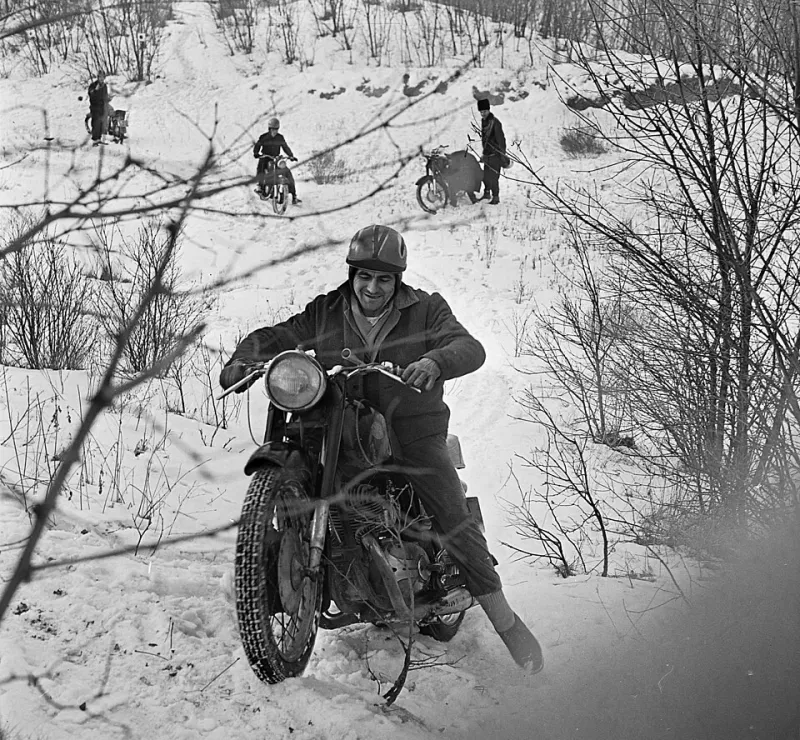
Photo: FOTO:Fortepan — ID 84556: Adományozó/Donor: MHSZ., CC BY-SA 3.0, via Wikimedia Commons
Winter does not ask a quarter-tonne tourer for permission. It sends a gritter out at 4am, lays down a salty stripe on the A-road, and waits for the first ride to spread it into every crevice the designers left behind. For a 300kg machine, that is not a cosmetic problem. Mass, bodywork and wide tyres combine to throw a fine brine mist into places a smaller bike never reaches. Treat salt as a maintenance schedule, not a reason to sulk in the garage, and the bike will come out the other side in decent order.
Know Where the Salt Settles
On a big tourer, the obvious places are rarely the ones that suffer first. The front engine cover and radiator get the spray, yes, but the real damage happens lower and further back: fork lowers, brake calipers, the centrestand pivot, the side-stand switch, suspension linkage, swingarm bearings and the fastener heads tucked behind the fairing. A heavy bike pushes a wider bow wave of gritty water than a naked middleweight, so the rear shock and the area around the number plate take a regular peppering too.
Do not forget the hidden electrics. ABS rings, wheel-speed sensors, connector blocks under the mudguard and the wiring loom above the rear tyre all sit in the firing line. If your bike runs a chain, salt will work its way past the O-rings and turn a neglected chain into a rusty, kinked mess. A shaft drive is not immune either; the final drive casing and its breather area still collect road film, and the paint on the bevel box is not armour.
The Rinse Is the Routine
The single most useful winter habit is a cold-water rinse after any ride on treated roads. Not a full valet. Not a pressure-washer blitz. A hose, a low-pressure nozzle and ten focused minutes. Start at the top, work down, and pay attention to the underside of the mudguards, the back of the fork legs, the calipers and the centrestand. Cold water is kinder than hot; hot water can drive salt into seams and soften protective films.
Keep the jet away from wheel bearings, fork seals, the headstock and electrical connectors. A gentle flow is enough to lift the brine before it dries. If the bike is properly filthy, use a pH-neutral motorcycle cleaner and a soft brush, then rinse again. Dry with a microfibre or a blower. Leaving a bike wet in a cold garage is its own small act of corrosion.
How often? If you commute daily through a gritting week, rinse daily. If the bike only comes out at weekends, rinse after every salty outing and give it a fuller clean once a week. The calendar matters less than the salt. A dry, salty bike is still a salty bike.
Protect After Clean, Not Instead
A rinse buys you time; a corrosion inhibitor buys you more. Once the bike is clean and dry, work a proper barrier product into the exposed metal. ACF-50 or XCP Rust Blocker are the usual workshop choices, applied as a fine mist and worked into crevices with a brush where you can reach. Avoid brake discs, pads and tyre treads. Do not use ordinary WD-40 as a long-term winter coating; it displaces water, but it does not stay put like a dedicated barrier.
On a quarter-tonne tourer, the areas worth extra attention are the fork lowers, the front engine casing, the sump, the rear shock body, the centrestand springs and the fastener heads around the bodywork. A light smear of silicone grease on rubber seals and a dab of anti-seize on exposed threads can save a lot of swearing in spring. Just keep every product away from braking surfaces and never coat a tyre.
Brakes, Fasteners and the Standing Gear
Salt loves brake calipers. It dries around the pistons, creeps under the dust seals and turns the pad pins into a challenge. On a 300kg bike, the brakes are already doing heavy work; winter grit makes them work harder. Check pad thickness, clean around the pistons, and make sure the caliper slides freely. If a piston is reluctant, deal with it before it becomes a seized caliper and a ruined disc.
Fasteners deserve a winter audit too. Heavy tourers carry a lot of bodywork, and a corroded bolt that will not budge is a future workshop bill. Check the obvious ones around the mudguards, fairing panels and luggage mounts, but do not gorilla every fastener with a torque wrench for the sake of it. Clean, protect and replace damaged heads before they round off. The centrestand pivot and side-stand switch are small parts that carry real weight and real consequence.
Ride or Retire? The Honest Calculation
There is no moral prize for riding through a gritting season, and no shame in laying a bike up. The question is whether you will actually do the work. If you ride, you must accept the rinse-and-protect routine as part of the ride. If you do not, the salt will quietly charge you interest in the form of corroded fasteners, sticky calipers and a spring rebuild you did not plan for.
If you lay the bike up, do it properly. Clean it, dry it, change the oil if it is due, fill the tank and add stabiliser, fit a battery tender, and get the tyres off the cold concrete if you can. A breathable cover in a damp garage is better than a plastic sheet that traps condensation. Do not start the engine every fortnight for two minutes; that is a recipe for condensation in the exhaust and oil. A proper lay-up is a single job done well, not a series of half-hearted tickles.
A Simple Winter Ledger
After every salty ride: cold rinse, dry, quick glance at the calipers and chain. Weekly: proper clean, corrosion barrier on exposed metal, tyre pressures and a check of the stand springs. Monthly: brake piston check, fastener audit, battery condition, and a look at the suspension linkage. Before spring: deep clean, fresh protection, brake fluid check and a pre-MOT walkaround.
A quarter-tonne tourer is built to take weather, but it is not built to take neglect. The gritters are already out. Decide which side of the ledger you are on, and then keep the bike on it.