The Honest Kilogram: Where Weight Loss Actually Helps a Heavy Tourer
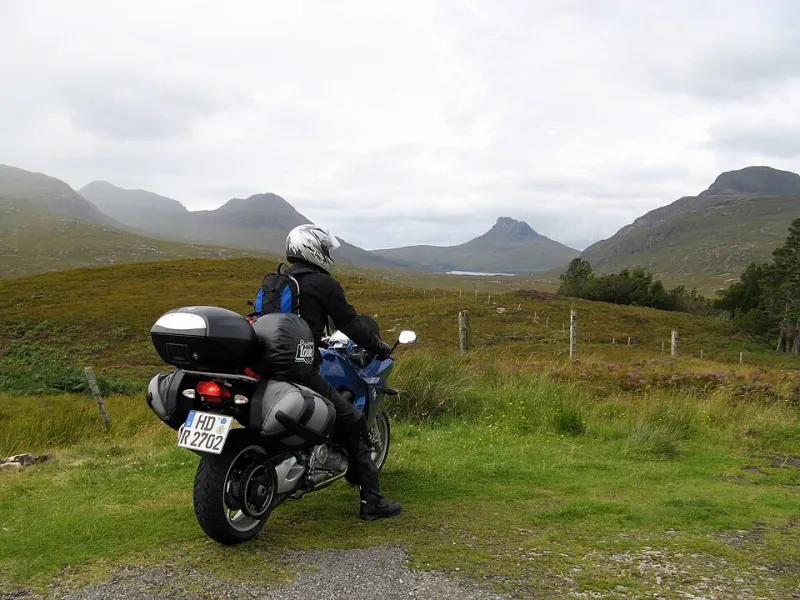
Photo: https://www.flickr.com/people/rainerebert/, CC BY-SA 2.0, via Wikimedia Commons
Every winter someone rolls a big tourer into the workshop and asks the same question: how do I make it lighter? It is a fair question. A 300kg motorcycle is a lot of motorcycle, and Britain in 2026 has not become any more forgiving of bulk. But the honest answer is less exciting than the brochure copy. You can remove a useful chunk of mass from a heavy tourer, but you cannot turn it into a middleweight, and some of the most popular “weight-loss” upgrades are little more than expensive theatre.
First, the uncomfortable truth about mass
Weight matters, but placement matters more. Ten kilogrammes off a tall top box changes the way a bike steers and paddles far more than ten kilogrammes off the engine cases. Mass high up and far from the centre of gravity is the enemy of low-speed confidence; mass low and central is much easier to live with. So before you start shopping for titanium, ask where the weight actually sits and whether removing it compromises the job the bike was built to do.
The battery: the easiest real win, with caveats
A lithium replacement for a conventional lead-acid battery is the most straightforward saving on most big tourers. Expect three to six kilogrammes, depending on the original battery size. That is a genuine gain, and it sits relatively high on many bikes, so you may feel it when paddling out of a sloping car park.
But this is not a free lunch. Lithium batteries dislike deep cold, can be fussy about charging profiles, and may not suit bikes with heavy alarm drains or permanently live accessory circuits. Check the cold-cranking rating against your engine, not just the amp-hour figure. Check the warranty position, too: some manufacturers have opinions about non-standard batteries, and your insurer may want to know if the specification changes. A quality unit costs £150–£400, so it is not a casual purchase. Buy a reputable brand with a proper battery-management system, not a bargain-bin cell with a sticker.
Exhaust systems: gains, but read the small print
A slip-on silencer might save two to four kilogrammes. A full system can save five to eight, sometimes more. On a big tourer, that is worth having, particularly if the original system is a heavy stainless steel boat anchor.
However, the workshop view is sceptical for good reason. A full system is not just a weight change; it is a fuelling change, a noise change, and potentially an insurance and MOT change. British noise rules have not loosened, and a system that fails the track-side or MOT check is not a performance upgrade. Many full systems need a remap or a fuelling module to run cleanly, which adds cost and complexity. Budget £600–£1,500 for a decent system plus fitting and setup, and ask whether the claimed weight saving is measured with the baffle in or out. Also check collector and joint quality: a cheap system that cracks at 20,000 miles is not lighter in any meaningful sense.
The luggage audit nobody wants to do
The most reliable weight saving on a touring bike is not a component. It is a clear-out. Empty panniers and top boxes are heavier than owners remember, especially metal adventure-style boxes. Add the mounting frames, the locks, the inner bags, and the “just in case” kit that has been carried since a trip in 2019.
Weigh the contents. A chain and lock can be four to six kilogrammes. A laptop, charger, spare gloves, waterproofs, a flask, a tool roll, a tyre inflator, and a litre of water add up quickly. It is common to find eight kilogrammes of removable kit on a bike that is otherwise meticulously maintained. None of it needs to be thrown away, but some of it can live in the garage for local rides. The trick is to build a day kit and a touring kit, rather than carrying the touring kit to the shops.
Accessories are heavier than they look
Crash bars, auxiliary lights, bar risers, footpeg extensions, GPS mounts, phone cradles, heated clothing wiring, and that handy bracket for a cup holder: each is small, but the total is not. A full set of quality crash bars can be four to seven kilogrammes. Auxiliary lighting and mounting hardware can be another kilogramme or two.
This is where judgement matters. Crash protection earns its place on a heavy tourer, especially in Britain, where a stationary tip-over on a cambered car park is a real risk. Do not remove it to chase a number on a spreadsheet. But do question the third set of auxiliary lights, the decorative billet covers, and the oversized top box you use twice a year. Keep what protects the bike or genuinely improves the ride; remove what merely decorates it.
Your own kit counts too
Rider weight is part of the system. A textile suit, boots, helmet, gloves, and a tank bag can easily total 12–15 kilogrammes. That is not a reason to skip breakfast, but it is a reason to be honest about total mass. If you are chasing 10kg off the bike while carrying 5kg of unnecessary kit in your jacket pockets, you have the priorities backwards. Pillion weight counts as well, and so does the top box load. A 300kg bike with a 90kg rider and 60kg pillion is a different vehicle from the one in the brochure.
The weight you add without noticing
Fuel is the big one. Petrol is roughly 0.75kg per litre, so a 20-litre tank holds about 15kg when full. That is not a reason to ride around on fumes, but it explains why a full tank feels different from a half tank on a slow-speed manoeuvre. Water in panniers, mud on the underside, chain lube, and tyre pressure all play a part. So does “kit creep”: the gradual accumulation of small items that never get removed. A monthly five-minute audit is worth more than most aftermarket parts.
What not to bother with
Titanium bolt kits save grams, not kilogrammes, and they introduce a corrosion and torque-discipline problem on a British winter bike. Carbon fibre body panels are expensive, fragile, and often no lighter than the plastic they replace. Drilling holes in structural parts is a firm no. Removing mudguards, chain guards, or crash protection to save weight is a false economy that will cost more at resale or in a claim. Smaller batteries with less capacity, lightweight brake discs that are not rated for the bike, and “race” wiring looms all fall into the same category: solutions to a problem you do not have.
How 10–15kg actually feels
A 10kg saving on a 300kg bike is about three per cent. You will not notice it on a motorway cruise. You may notice it when paddling the bike backwards out of a gravel lay-by, when catching a slow tip on a camber, or when making a tight U-turn on a narrow B-road. Braking improves because there is less kinetic energy to shed, but the difference is modest and should never be used as an excuse to brake later. Fuel consumption may improve slightly, though riding style and tyre pressure will have a bigger effect. Suspension sag changes a little, so check your preload and damping settings after a significant weight change.
A workshop-sensible plan
Start with a baseline. A public weighbridge is cheap and accurate; two bathroom scales and a plank can work for a rough figure. Weigh the bike with a full tank, then empty the luggage and weigh again. List every removable item and its weight. Then work in three phases: remove what you do not need, replace what is genuinely heavy and safe to replace, and rethink what you carry. Keep a log of changes, keep the bike MOT-legal, and tell your insurer about anything that alters the specification. Then spend what is left on good tyres and some low-speed training. A lighter bike helps; a better-trained rider helps more.