Heavy Metal Audition: Finding a Workshop That Actually Speaks Quarter-Tonne
A quarter-tonne tourer is not simply a bigger bike with more bodywork. It changes the workshop equation. The ramp has to be rated for it, the tyre machine has to handle stiff touring rubber, the diagnostic laptop has to understand cruise control and semi-active suspension, and the person holding the spanners has to be honest about how long a heavy bike takes to strip. Most garages can change oil on anything with two wheels. Far fewer are set up to look after a 300kg motorcycle properly.
That is why choosing a workshop should feel less like shopping around for the cheapest hourly rate and more like interviewing someone for a job. You are not just buying labour. You are buying their equipment, their experience, their parts network and their willingness to tell you when a job is bigger than it looks.
Start on the shop floor, not the website
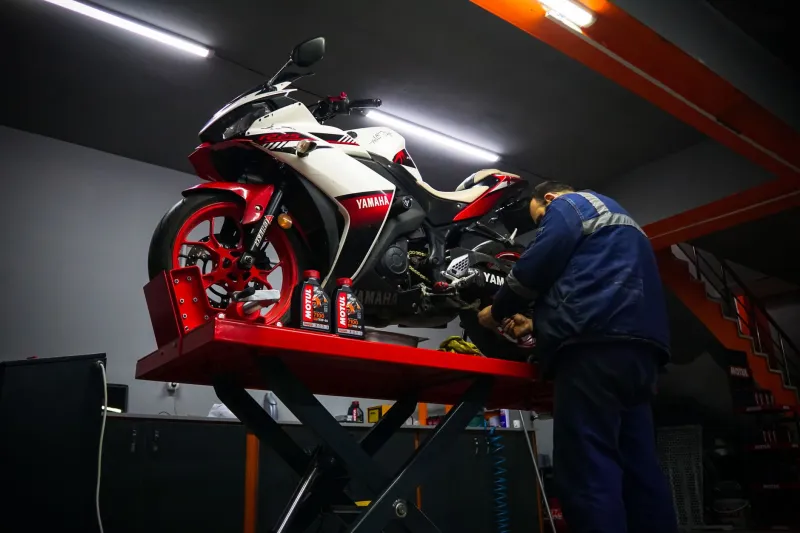
A polished website tells you almost nothing. A visit tells you plenty. Ask if you can drop by before booking anything. You do not need a full tour, but you do need to see where the bike will sit. Look at the main ramp. Is it wide enough for a big tourer with panniers off and a wide fairing? Is it rated for the weight with a healthy margin? Are there proper wheel chocks and soft straps, or just a few ratchet straps hooked to whatever is nearby?
Look at the floor around the bench. A busy workshop is not a showroom, so do not expect clinical tidiness. But you can tell whether heavy bikes are normal there or a rare event. If every stand is a paddock stand designed for a 180kg sportbike, and the only lift is a small scissor jack, that is your answer. A quarter-tonne bike needs a proper ramp, a front wheel clamp and tie-down points that are not going to mark the paint.
The lifting question is not optional
Ask directly how they get a heavy tourer onto the bench. The answer should be specific. They should mention the ramp rating, how they secure the front wheel, where they strap the rear, and how they avoid loading the sump or exhaust. If the answer is vague, or if they say they simply use the centre stand and a trolley jack, be cautious. A 300kg bike with a full tank and luggage is not the place for improvisation.
This matters even for simple jobs. A tyre change on a big tourer can turn into a wrestling match if the bike is not stable. Brake work, fork service and suspension jobs all need the front end secure. A workshop that has thought about heavy bikes will have a routine for it, not a workaround.
Tyres are the tell
Big touring tyres are expensive, stiff and heavy. Ask what tyre-changing equipment they use. A manual lever and a balancer can work on a lightweight rim, but a 300kg bike with a 17-inch rear and a stiff touring carcass is a different task. You want to see a proper tyre machine with a assist arm and clamps that will not damage the rim, plus a balancer that can handle the wheel assembly.
Ask how they deal with TPMS sensors and ABS rings. Ask whether they torque axle nuts and caliper bolts to spec. These are basic questions, but the answers tell you whether the workshop treats a big tourer like a precision machine or like a farm trailer. A good garage will not be offended. They will be glad you asked.
Diagnostics, software and the modern big bike
Quarter-tonne bikes are increasingly electronic. Cruise control, ride modes, semi-active suspension, keyless ignition, cornering ABS and tyre pressure monitoring are all normal now. A generic fault-code reader might clear a warning, but it will not always tell you why the bike set it. Ask whether the workshop has manufacturer-level diagnostic software, or at least a specialist system that covers the major brands they service.
You do not need a main dealer for everything. A good independent can be better value and easier to talk to. But they need the right tools and the willingness to update them. Software subscriptions cost money, and that cost has to come from somewhere. A workshop that refuses to invest in diagnostics will eventually meet a job it cannot finish.
Parts sourcing and lead times
Heavy tourers often use specific bearings, brake discs, final drive components and bodywork clips. Ask how they source parts. Do they use original equipment, quality aftermarket brands, or whatever is cheapest on the day? Can they get parts for older models, or do they only work on recent bikes? What happens when a part is on backorder?
A good workshop will be straight with you about lead times. They will also tell you when a pattern part is fine and when it is a false economy. If they promise every part by tomorrow for a 15-year-old tourer, be suspicious. If they say they will check availability and call you back, that is a better sign.
Labour estimates and the heavy-bike premium
Ask for an estimate in hours, not just a vague price. A big tourer takes longer to strip, longer to lift and longer to test. Fairings, luggage systems and crash bars all add time. A workshop that quotes a heavy bike at the same labour time as a naked middleweight is either guessing or rushing.
Get the hourly rate in writing, including VAT. Ask what happens if they find a seized fastener or a corroded brake line. Ask whether they will call before doing extra work. A written estimate is not a guarantee, but it shows they are organised. A garage that refuses to put anything in writing is telling you something useful.
Questions worth asking before you book
Have you worked on this model or a similar heavy tourer before? What is your ramp rating? How do you secure a 300kg bike for a front-end job? What tyre machine do you use? Can you read ABS and suspension fault codes? Do you road-test big bikes, and is that covered by insurance? Can I see the old parts when the job is done? What is your policy on storage if a part is delayed?
You do not need perfect answers to every question. You need a pattern of competence and honesty. A workshop that says 'we will check that' is often better than one that bluffs.
Red flags and a sensible first job
Be wary of any garage that says 'we do all bikes' without qualification. Generalist workshops are not villains, but a quarter-tonne tourer is not a generalist job. Watch for no proper ramp, no tyre machine, no diagnostic equipment, vague quotes and a reluctance to let you see the workshop. Also watch for a shop that is too quiet for its own good. Good heavy-bike specialists tend to be busy.
Start with a smaller job: a tyre, a brake fluid change, an MOT preparation check. See how they communicate, how they treat the bike and whether they call when they say they will. If that goes well, trust them with the bigger work. In 2026, a good workshop is not the cheapest one in the county. It is the one that respects the mass, knows the systems and talks to you like an adult.