Rolling Off the Power: Slowing a 300kg Bike Without Punishing the Mechanicals
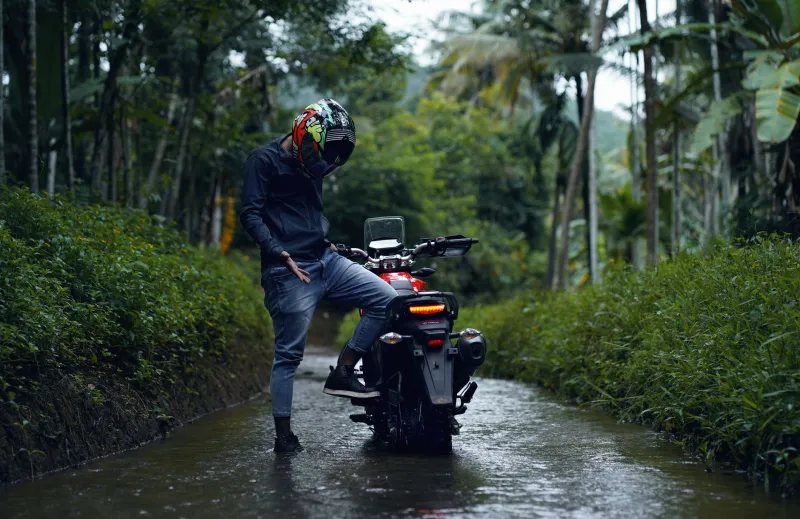
The Snake Pass in November is not the place to discover that you have been leaning on your gearbox as though it were a brake caliper. The surface is greasy, the camber is more of a suggestion than a promise, and the thing underneath you weighs the same as a small motorcycle with a passenger and a fortnight of luggage strapped to it. Shut the throttle hard in second and the whole plot pitches forward, the rear tyre skips a beat, and a small kick comes back through the bars — the engine has just asked the back wheel to do something it was not expecting.
Engine braking is one of those skills everybody assumes they have, because it happens whether you think about it or not. The question is whether it happens well, and whether it happens without quietly costing you money down the line.
What is actually doing the slowing
When you roll off, three things work against your momentum. First, the engine has to keep turning against a closed throttle, and the effort of dragging air past the butterflies and pushing exhaust gas out of the way is real work — pumping losses, if you like the proper term. Second, whatever compression ratio the manufacturer gave you becomes a brake of sorts, resisting the piston on its way up. Third, and most overlooked, there is a big lump of metal spinning at several thousand rpm, and flywheel mass does not care about your plans for the next corner.
On a large-capacity twin, that combination can be genuinely strong. A 1200cc V-twin with a heavy crank will slow a laden bike almost as convincingly as a light squeeze of the front lever. A smooth four is milder but more consistent. A triple sits somewhere in the middle and tends to feel the most forgiving on greasy tarmac. Knowing which one you own shapes everything else.
Why the weight changes the arithmetic
The physics is straightforward enough: the same braking force acting on a heavier machine produces a slower rate of deceleration. But grip is not fixed either. A 300kg bike plus rider puts a great deal of load through the contact patches, so the tyres have more to work with in the dry. The problem is not usually a shortage of grip — it is what happens to the chassis while that load is shifting.
Heavy bikes have long suspension travel at the rear and not much of it at the front. Close the throttle abruptly and the forks dive, the rear extends, and the steering geometry changes just as you were hoping to turn in. Add a pillion and the effect is magnified. Engine braking is at its best when it is gradual; at its worst it is a step change that the suspension spends half a second catching up with.
Release, match, repeat
The single biggest improvement most riders can make is to stop treating the throttle as a switch. Rolling off over a second or so rather than instantly gives the front end time to settle and the rear tyre time to accept the load. Downshift one gear at a time, letting the clutch out smoothly, and match the revs if your bike does not have a slipper clutch to do it for you. Blipping is not a racing affectation — on a big twin it is simple mechanical sympathy.
Do the downshifting on the approach, upright, before you commit to the bend. A downshift mid-corner on a wet B-road is where rear-wheel speed and road speed part company, and the resulting chirp is rarely the sort of thing you want to feel through the seat.
Wet roads and roundabout discipline
On greasy tarmac, closed-throttle deceleration is gentler than grabbing a handful of front brake, and it keeps the suspension loaded more evenly. That makes it a useful tool approaching roundabouts and junctions where a diesel spill or a patch of leaf mulch is entirely possible and entirely invisible. But it is a supplement to the brakes, not a replacement. Relying on engine braking alone to scrub off 40mph into a tight junction asks a lot of the rear tyre and gives you very little in reserve if the surface turns out to be worse than expected.
Town work: the gear you did not think you needed
Thirty limits, traffic calming, speed cushions and the general stop-start misery of a British high street are where engine braking gets awkward. First gear on a heavy bike is brutally over-geared for walking-pace work — shut the throttle and you get a lurch that feels like the whole machine has been tapped on the shoulder. The habit worth building is running a gear higher than feels natural and using light throttle plus gentle deceleration instead. It is smoother, it is kinder to the clutch, and it stops the bike from bucking through every set of traffic lights.
The wear ledger
Tyres
The front tyre takes the load transfer; the rear tyre takes the braking torque and, on aggressive downshifts, the scrub. Repeated hard closed-throttle downshifts on a big bike will flat-spot a rear over time, particularly if you are in the habit of doing it with the clutch dumped. Pressures matter more here than most riders realise — an under-inflated rear will squirm under engine braking long before it complains under power.
Chain and sprockets
This is where the real cost sits. Engine braking loads the opposite face of the sprocket teeth and the return run of the chain, so a rider who decelerates hard on the throttle all day wears both faces of the drivetrain rather than one. Hooked teeth, tight links and a slack chain all become worse under closed-throttle load, and the resulting snatch is felt through the whole machine. Check slack, check for hooked teeth, and replace chain and sprockets as a set.
Belt
Belts cope with engine braking reasonably well, but tension and alignment become more critical. A belt that is slightly loose will flap under closed-throttle load and a belt that is slightly tight will whine. Check both at service intervals, and remember that a wet belt run on a gritty road is not the same as a dry one.
Shaft
Shaft-drive bikes squat at the rear under closed throttle — the opposite of the lift you get on acceleration. It is harmless enough in isolation but it does change the geometry mid-corner, and the bevel box and universal joints are taking reverse torque every time you roll off. Change the final drive oil on schedule and keep an eye on the bevel box seal for weeping.
Clutch and gearbox
A slipper clutch earns its keep on a heavy bike, and most modern tourers have one. If yours does not, you are the slipper. Repeated clutchless downshifts with the throttle shut can round the dogs in the gearbox over tens of thousands of miles, and a clutch that is already marginal will make its displeasure known under engine braking first.
What to check on the bench
Start with chain slack and sprocket condition, then clutch fluid and lever feel, then final drive oil if you run a shaft. Tyre pressures and pad wear are worth a look — engine braking saves less pad material than people assume, because you are still using the brakes for the final stop. Ten minutes with a torch and a manual beats a recovery truck on the A68.
The short version
Roll off progressively rather than chopping the throttle. Downshift one gear at a time, upright, before the bend. Run a gear higher in town. Treat engine braking as a partner to the brakes, not a substitute. And keep an eye on both faces of your sprockets — that is where the bill eventually lands.