Cold Hands, Hot Wires: Budgeting Amps for Heated Kit on a Heavy Tourer
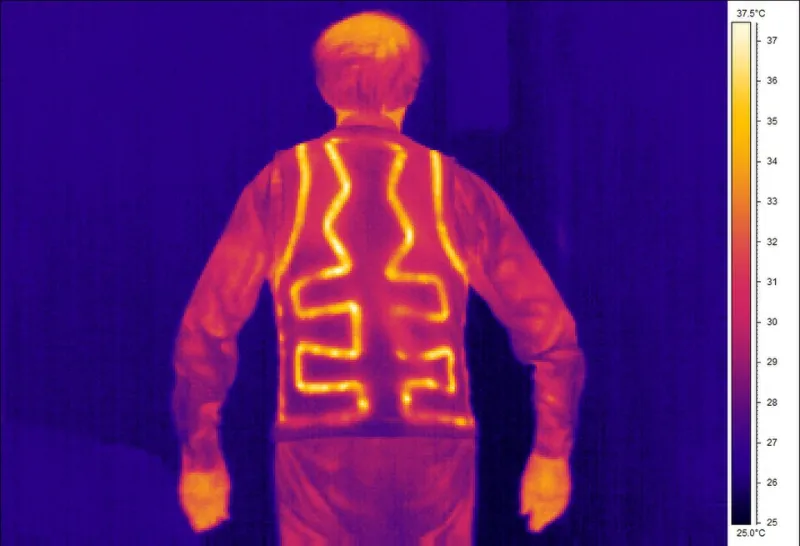
Photo: Shenzheneer, CC BY-SA 4.0, via Wikimedia Commons
There is a particular kind of January morning on a big tourer: fog sitting in the valley, salted grit dusting the tank, and a heated jacket waiting in the pannier like a small electric hug. The temptation is to plug in everything — jacket, gloves, grips, phone, satnav — and let the bike sort it out. Most of the time it will. The rest of the time you end up with a flat battery at a motorway services and a long, cold wait for recovery.
The fix is not complicated. It is a budget. Not money, but amps. Work out what the bike can generate, what it is already using, and what your heated kit wants. Then leave a margin for the cold, the age of the battery, and the fact that a quarter-tonne tourer idling at a set of roadworks is not generating anything like its headline output.
Start With a Load Count, Not a Shopping List
Electrical loads are easy to add up once you stop thinking in watts and start thinking in amps. On a 12V system, amps equal watts divided by 12. A typical heated jacket pulls around 6 to 7 amps. Gloves are usually 2 to 3 amps for the pair. Heated grips sit somewhere between 2 and 4 amps depending on the setting. Add a phone charger at 1 amp, a satnav at half an amp, and perhaps heated trousers at 4 amps, and you are looking at 15 to 19 amps, or roughly 180 to 230 watts.
That is not enormous. But it is not nothing either, especially when the bike is also running a 55W headlight, a fuel pump, an ECU, a dash, and whatever else the manufacturer decided to fit. Before you buy the full heated suit, write the numbers down. The back of a fag packet is traditional; a note on your phone is fine too.
What Your Alternator Actually Gives You
Big tourers often advertise alternator outputs of 600 to 1000 watts. That figure is real, but it arrives at cruising revs, usually somewhere north of 4,000rpm. At idle, with the engine ticking over and the fan cutting in, you might be getting a third of that. Subtract the bike's own consumption — often 150 to 250 watts — and the headroom at idle can be surprisingly thin.
This matters because heated kit is usually switched on at the start of a ride and left on through town. If you are stationary in traffic for twenty minutes with jacket, gloves, grips and trousers all drawing power, the battery is doing the work. On a healthy battery that is fine for a while. On a five-year-old lead-acid unit in a cold bike, it is a countdown.
CANbus Is Not a Suggestion
Modern big bikes do not simply have wires; they have monitored circuits. Tap into the tail light to feed a heated jacket and the bike may notice the extra current and throw a warning, or it may not — which is worse, because you will only find out when something else stops working.
The sensible route is a dedicated fused feed from the battery, switched by a relay triggered by the ignition or by a voltage-sensing relay that only wakes up when the engine is running. Many tourers have an accessory socket already rated for this job, but check the handbook. If the socket is canbus-managed and limited to 5 amps, it will not run a full heated suit. Use it for a phone and nothing more.
Fusing, Connectors and the Wet Stuff
A fuse is there to protect the cable, not the gadget. Size it about 1.25 to 1.5 times the expected current. A 10-amp heated kit wants a 15-amp blade fuse. Keep cable runs short and use 14AWG or 2.5mm² wire for anything drawing more than 10 amps over more than a metre. Thin wire gets warm, and warm wire in a British winter is a false comfort.
Connectors deserve more respect than they usually get. Cigarette lighter plugs are fine for a phone, but they are a poor choice for a sustained 15-amp draw; the spring contact heats up and the plastic softens. SAE connectors are acceptable for lower currents, but Anderson Powerpole connectors are better for heated kit that stays plugged in for hours. Use waterproof connectors where they are exposed, pack them with dielectric grease, and give the cable some strain relief so the plug is not taking the weight of the jacket.
Reading the Warning Signs
A cheap voltmeter wired to the dash is one of the most useful accessories you can fit to a big winter bike. A healthy battery rests around 12.6V. With the engine running, you should see 14.0 to 14.5V at the battery. Switch on every heated item at idle and watch the gauge: if it falls below about 12.8V, the bike is running off the battery, not the alternator. That is your signal to turn something off or ride away.
Other clues are less polite. A headlight that dims at idle when the jacket clicks on. A fuse holder that feels hot after twenty minutes. A dash that flickers when you hit the heated grips. An ABS warning light that appears after a long, cold, low-speed section. A battery that needs topping up every fortnight. None of these are normal; they are the charging system asking for help.
The Battery Is Part of the Budget
A tired battery has less reserve, and reserve is exactly what you are spending when you run heated kit at low revs. An AGM battery copes better than a conventional lead-acid unit, and a lithium battery holds voltage well but needs care when charging in the cold. Whatever is fitted, keep it on a smart charger when the bike is parked. A battery that is already half flat before you switch the jacket on is not a battery; it is a liability.
A Sensible Winter Setup
The practical answer for most quarter-tonne tourers is a fused distribution block, a relay, a handlebar-mounted controller for the heated kit, and a voltmeter you can actually see. Run the jacket and gloves from the block, leave the grips on the bike's own circuit if they are factory-fitted, and keep the phone charger on the accessory socket. Then adopt one simple rule: switch the heated kit off before you stop, and switch it back on after you pull away. It is a small habit that saves a large amount of grief.
Before a long winter ride, test the whole setup at home with the engine idling. Watch the voltage, feel the connectors, and listen to the regulator. A big bike has the muscle to carry heated kit, but only if you know where the warmth is coming from. The budget is arithmetic, and the arithmetic is on your side — as long as you do it.