The Christmas Tree Protocol: Making Sense of Rider-Aid Warnings on a Big Bike
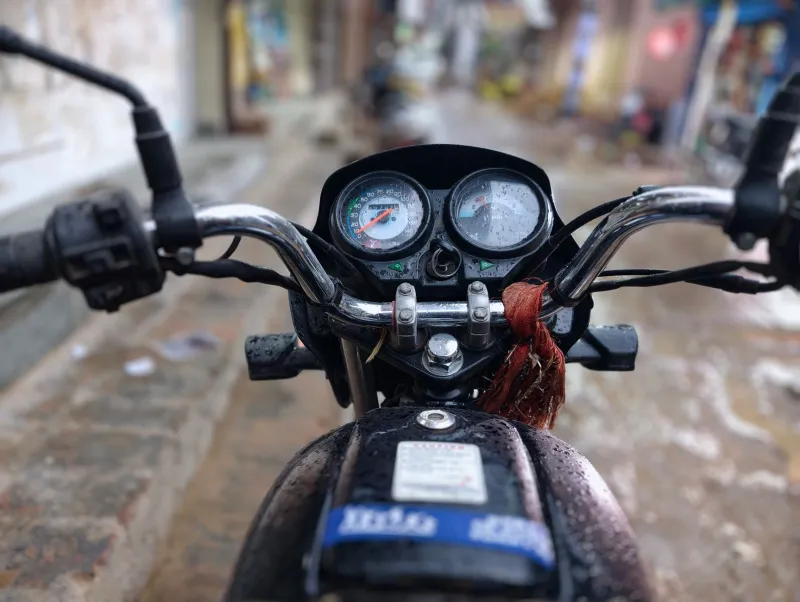
You are 40 miles from home, the rain is doing that fine horizontal thing it does in Britain, and the dash has lit up like a service station at midnight. ABS. Traction control. Maybe the IMU. Possibly the quickshifter has gone on strike too. On a 300kg tourer or adventure bike, that little cluster of amber symbols can feel like a very expensive countdown.
Take a breath. A rider-aid warning is a clue, not a diagnosis. Most of the time it is not a dead ABS modulator or a failed inertial measurement unit. It is a tired battery, a muddy wheel-speed sensor, a mismatched tyre, a damp connector or a brake switch that has spent too long being sprayed with road filth. The trick is to work in a sensible order and resist the parts cannon.
First, work out what has actually gone quiet
Rider aids are layered. ABS looks after braking. Traction control looks after rear-wheel slip. The IMU feeds lean angle and acceleration data to both, plus cornering lights on some bikes. A quickshifter is its own little system, usually dependent on lever position, clutch switch, engine rpm and the ECU. A fault in one can pull the others down because they share sensors, power and data.
A solid light is usually a confirmed fault. A flashing light may mean the system is temporarily unavailable, a calibration is incomplete, or the bike is in a limp-home state. Note the exact sequence at ignition-on and whether anything changes when you pull the clutch, press the brake or ride a few hundred yards. That information is worth more to a technician than a vague memory of the dash glowing on the A38.
The roadside order: cheap checks first
Start with the battery. Big twins and triples need serious cranking current, and a battery that is merely tired can drop voltage far enough during start-up to upset ABS and traction control. Check the terminals are tight and clean, and look for corrosion under the caps. If you carry a multimeter, a rested battery should show roughly 12.4 volts or more; with the engine running you want to see a healthy charging voltage, typically somewhere in the 13.5 to 14.5 range depending on the model. A jump start that clears the lights proves nothing except that the battery was low.
Next, tyres. Check pressures cold, check sizes, and check whether the front and rear are a sensible pair. ABS and traction control compare wheel speeds, and a mismatched circumference — a new tyre of a different model, a worn rear against a fresh front, or simply very low pressure — can confuse that comparison. On a heavy bike, tyre pressure also affects how the thing steers and stops, so this is not a wasted check.
Then wheel-speed sensors and their rings. British B-roads donate a fine paste of grit, salt and farm muck, and a stone wedged near a sensor ring can cause a fault that looks electrical. Clean gently. Do not lever at the ring with a screwdriver. Look for a bent tooth, a sensor that has been knocked out of position, or a cable rubbed through near the caliper or swingarm.
Damp wiring is not a personality trait
UK weather is excellent at finding chafed wires and tired connectors. Have a look around the steering head, behind the radiator, near the rear shock and around any accessory wiring that has been added over the years. A damp multi-plug can send nonsense down the CAN bus. Use the correct contact cleaner, let it dry, and apply dielectric grease sparingly where the manufacturer allows it. Avoid blasting connectors with a pressure washer and then wondering why the dash has opinions.
Brake-light switches and clutch switches deserve a mention too. Some systems will disable or flag a fault if they see implausible switch behaviour. A sticky rear brake pedal, a clutch switch that no longer clicks, or a side-stand switch that has had a hard life can all muddy the water. Check the simple mechanical action before suspecting computers.
What each warning tends to mean
An ABS light on its own often points to a wheel-speed sensor, its ring, a brake switch, low voltage or a wiring issue. The ABS pump is usually the last suspect, not the first. Traction control uses wheel speed plus engine and IMU data, so the same dirty sensor can affect it. An IMU fault may follow a tip-over, a battery replacement, suspension work or a low-voltage event, and some bikes need a calibration ride or a dealer-level reset after certain jobs. A quickshifter fault can be as simple as a stiff lever pivot, a clutch switch, a loose chain or a tired battery; it is not automatically a new sensor.
If several warnings appear together, think shared causes: power, earth, voltage, a common connector or a data-network problem. That is cheaper to investigate than replacing three separate components on a hunch.
Codes before components
At the workshop, read the codes before clearing them. Live wheel-speed data at walking pace will show whether one sensor is dropping out or reading differently. A technician can check sensor gaps, inspect the rings and test brake switches. Some systems need manufacturer software for calibration, especially after IMU or suspension work. That is fine. What is not fine is fitting a new ABS modulator because the light came on and nobody had looked at the battery earth strap.
When to stop riding
If the brakes feel wrong, the ABS pump runs continuously, fluid is leaking, a fuse blows repeatedly or there is a burning smell, stop. A rider-aid warning is one thing; a brake fault on a quarter-tonne bike in the wet is another. Get recovered. The money you save on a tow is not worth the risk.
Treat the dash like a grumpy colleague. It is usually telling you something boring and fixable. Work from voltage to tyres, from sensors to wiring, and from codes to components. A clean terminal and a correct tyre pressure have solved more Christmas-tree dashboards than any parts catalogue.